Types of Couples Therapy
When couples begin therapy, one of the first questions they often ask is, “How does this work, do you have a specific methodology or theory you use?” While many therapists integrate multiple approaches, understanding the most common models can help you feel more informed and you can begin to do your own research on what these modals teach.
Below is an overview of several widely used modalities of couples therapy and what they tend to emphasize.

Gottman Method Couples Therapy
The Gottman Method is a research‑based approach developed by Drs. John and Julie Gottman. It focuses on strengthening friendship, improving communication during conflict, and increasing positive interactions between partners. Couples learn practical tools to reduce criticism, defensiveness, shutdown, and contempt, while increasing appreciation, repair, and emotional connection. Many couples appreciate the structure and clarity of this method, especially if they want concrete skills they can use in daily life. One of the most useful tools from this approach is the Rappaport technique and the concepts of “turning towards bids.” In a nutshell, the Gottman method focuses on developing and amplifying the “positive” dimensions of relationships and making them more meaningful vs. just addressing the symptoms of distress.
Emotionally Focused Therapy (EFT)
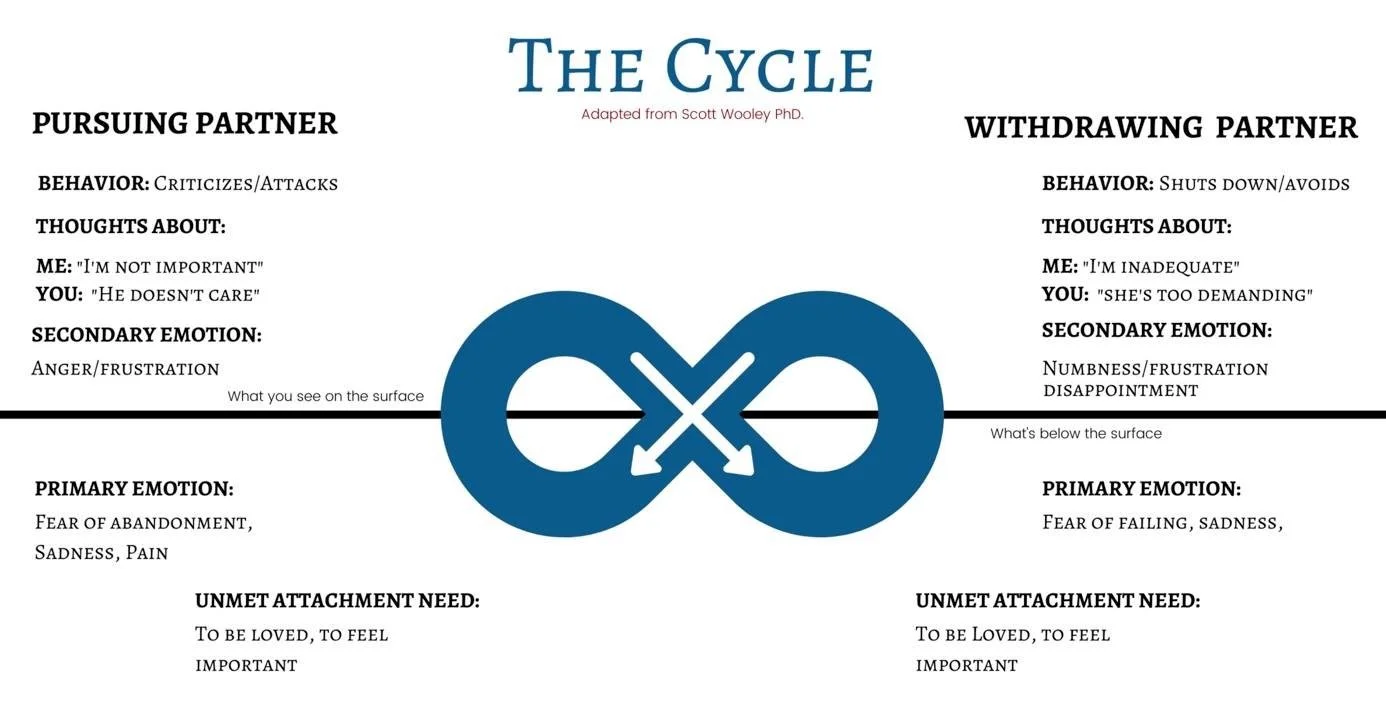
EFT is an attachment‑based approach that focuses on the emotional bond between partners. Rather than emphasizing skills alone, EFT helps couples understand the underlying emotions and attachment needs that drive conflict and disconnection. Therapy centers on identifying negative interaction cycles and creating new experiences of emotional safety, responsiveness, and closeness. EFT can be especially helpful for couples who feel emotionally distant, stuck in recurring patterns, or longing for deeper connection. Vulnerability is at the heart of EFT.
What I appreciate about EFT is the cycle of moving couples from “secondary emotions” to identifying and articulating “primary emotions.” When we speak from our primary emotions, we invite vulnerability and this often allows our partners to empathize and feel some softness towards us. When we communicate only through our secondary emotions, we are often in a protective mode that activates defensiveness and “fight” in our partners as secondary emotions tend to communcate “it’s your fault…something is wrong with you” whereas primary emotions communicate “I’m hurt, I need you, please see me.”
Integrative Behavioral Couples Therapy (IBCT)

IBCT blends behavior change with emotional acceptance. In this approach, couples learn to recognize and soften around differences rather than trying to eliminate them entirely. Therapy focuses on increasing empathy, acceptance, and understanding, while also supporting behavior change where appropriate. IBCT is often a good fit for couples who feel polarized around long‑standing issues or differences in personality, habits, or values. So much of successful long term relationships hinges on accepting one’s partner and making peace with some of their flaws and limitations (at least those that are not actively harming you in significant ways) and getting creative with how you adapt or problem solve vs. continuing to resist core personality differences. IBCT draws on one of the most important concepts in couples therapy: increasing differentiation.
IBCT also endorses the idea that behavior change follows emotional softening, however, I want to challenge this idea in that sometimes, behavior shift is easier to make for some individuals—particularly those who struggle with vulnerability or are just beginning to understand their emotions and learn empathy—and softening happens after evidence of actionable change is made.
Relational Life Therapy (RLT)
Relational Life Therapy is an approach that focuses on accountability, relational balance, and emotional maturity. It highlights patterns of power, boundaries, and reactivity within relationships. RLT is often more active and confrontational than other models, with an emphasis on helping couples shift entrenched and oppressive dynamics. RLT carefully examines who holds emotional power, who demands/expects accommodation, who takes responsibility for repair and growth with the hopes of making all of these shared or more equitable.
It emphasizes a socially and culturally progressive approach to relationships where individuals are encouraged to think about their level of emotional maturity and to move from responding from their adaptive child state (driven by survival and more primitive defenses) to responding from their wise adult self (taking accountability, regulating emotions, and having empathy). What I highly value about RLT is it’s one of the few mainstream couples approaches that directly examines gender role expectations and examines psychological patriarchy and cultural norms that may be maladaptive to a couples’ functioning. It also asserts that accountability and emotional maturity are essential to maintaining a healthy relationship.
Imago Relationship Therapy
Imago therapy has some psychodynamic elements in that it explores “why” two people chose one another (because the answer is rarely due to just circumstances or chance) and how past experiences from childhood shape current conflict. Imago therapy takes a more holistic approach and views couples therapy and repair as opportunities to heal and address deeper wounds—from outside and before the relationship as well.
The word “imago” means image and this form of therapy believes that two people are drawn to one another (unconsciously) based on familiar patterns from childhood. These can include things that were genuinely positive and safe but also insidious and harmful. One thing I’ve discovered in all my years as a couples therapist is that two individuals, even if they appear to be totally different and one more likable/mature than the other, are often just two sides of one coin: they are very likely much more similar in emotional development than is initially visible through their external personalities. Conflict activates deeper unmet attachment needs or past hurts and Imago therapy sees these present issues as an opportunity for deeper personal repair. This type of therapy is significantly more reflective and psychodynamic than some of the other approaches.
Psychobiological Approach to Couples Therapy
Borrowing from many of the above models, PACT is a neuroscience-informed model that hones in on the safety component of secure attachment and how partners regulate one another in the “here and now.” This approach focuses on moment by moment interactions between partners and how they are working towards regulating each other’s nervous systems through their verbal and non-verbal communication so repair can occur quickly. Sessions are highly experiential and I’d say out of all the modalities of couples therapy, this one is best done in person (often in an intensive) given the therapist is highly attune and very active in noticing “threat” cues such as rigid posture, tension in the body, eye contact between partners, and subtle changes in breathing and tone. The idea is to help partners co-regulate and feel safe, calm, and open enough so that their higher order brain functions remain in tact and they can better listen, empathize, and understand one another.
Solution‑Focused Couples Therapy
Solution‑focused therapy is brief and forward‑looking. Instead of spending time analyzing problems or even narrowing in on emotions, this approach emphasizes identifying what is already working, what couples want more of, and building on successes and creating concrete plans to enact more of what they want. Therapy focuses on goals, strengths, and small, meaningful changes that can create positive momentum. The emphasis will on what works and the “exception” moments that are desirable. This model can be helpful for couples facing specific challenges who want practical, short‑term support. This form of therapy is ideal for couples who already have a solid foundation and have the internal and external resources to enact change quickly, with minimal behavioral blocks. Solution focused approaches utilize the “miracle question” and scaling questions to anchor progress and define goals.

I often think of SFCT as more like coaching sessions where couples just need a nudge and some accountability to make the changes they are already very capable of making. However, many couples come to therapy hoping for a “fast change” and some assert they want this form of therapy because they do not want to spend time in their emotions, find the work of traditional couples therapy arduous, or because they are overly intellectualized. When these are the primary motivators, it becomes clear pivoting to a different modality is necessary.
Integrative Couples Therapy
Many therapists, like myself, practice integrative or eclectic couples therapy, meaning they draw from multiple models rather than relying on a single approach. In my opinion, this is the most effective way to ensure couples get the help they need and therapy is focused on the specific skills, problems, and goals that are most important. In addition to all the specific modalities above, I draw from pretty much my entire training and different ideas and interventions become relevant at different times pending the specific people in front of me.
What all the main models have in common is clear: empathy, emotional regulation, some level of cognitive flexibility, personal accountability, maturity, and solid communication and conflict resolution skills (particularly when emotions are running high and people are triggered) are essential ingredients to successful long term relationships.